Our Sustainability Commitment
Sustainability in freight forwarding is not a marketing exercise — it is an operational discipline. As a Czech-based freight forwarder operating across European and global trade lanes, we recognise that logistics is a significant contributor to carbon emissions. We take that responsibility seriously. Our approach to sustainable freight is built on measurable actions, transparent reporting, and continuous improvement across every shipment we handle. We do not make commitments we cannot verify, and we do not report progress we cannot prove.
Our sustainability framework aligns with the EU Corporate Sustainability Reporting Directive (CSRD) and the broader ESG principles increasingly required by our B2B clients. Whether you are a manufacturing company managing Scope 3 emissions or a logistics manager responding to procurement sustainability criteria, we are structured to support your requirements with real data and credible processes.
CO2 Measurement & ESG Reporting for Clients
Accurate CO2 reporting starts with accurate data. We calculate transport emissions in accordance with the EN 16258 standard and the GLEC Framework, providing shipment-level carbon footprint data across road, rail, sea, and air freight. This is not an estimate applied at a company level — it is calculated per consignment, per transport mode, and per route.
For clients with formal ESG reporting obligations, we provide:
Shipment-level CO2 emission reports exportable in formats compatible with your internal reporting systems. Annual carbon summaries segmented by transport mode, corridor, and volume. Scope 3 logistics data structured to align with GHG Protocol categories. Carrier emission benchmarking so you can compare performance across your supply chain partners.
This data is available through our client portal and can be integrated via API into your ERP or sustainability management platform. Transparent green logistics reporting is not an add-on service — it is included as standard in our freight management offering.
Sustainable Logistics Practices
We reduce emissions through operational decisions made every day, not through offset purchases. Our primary levers are consolidation, route efficiency, and carrier standards.
LTL Groupage Consolidation: Partial loads are consolidated into full truck loads through our groupage network across Central and Western Europe. Fewer trucks moving more freight per vehicle kilometre directly reduces per-unit emissions. Clients shipping less-than-truckload volumes benefit from the carbon efficiency of a shared load without sacrificing transit times.
Route Optimisation: Our transport management system continuously evaluates routing options to minimise total kilometres driven, reduce empty running, and prioritise intermodal alternatives where rail is viable. Road-to-rail modal shift remains a key emissions reduction tool on longer European corridors.
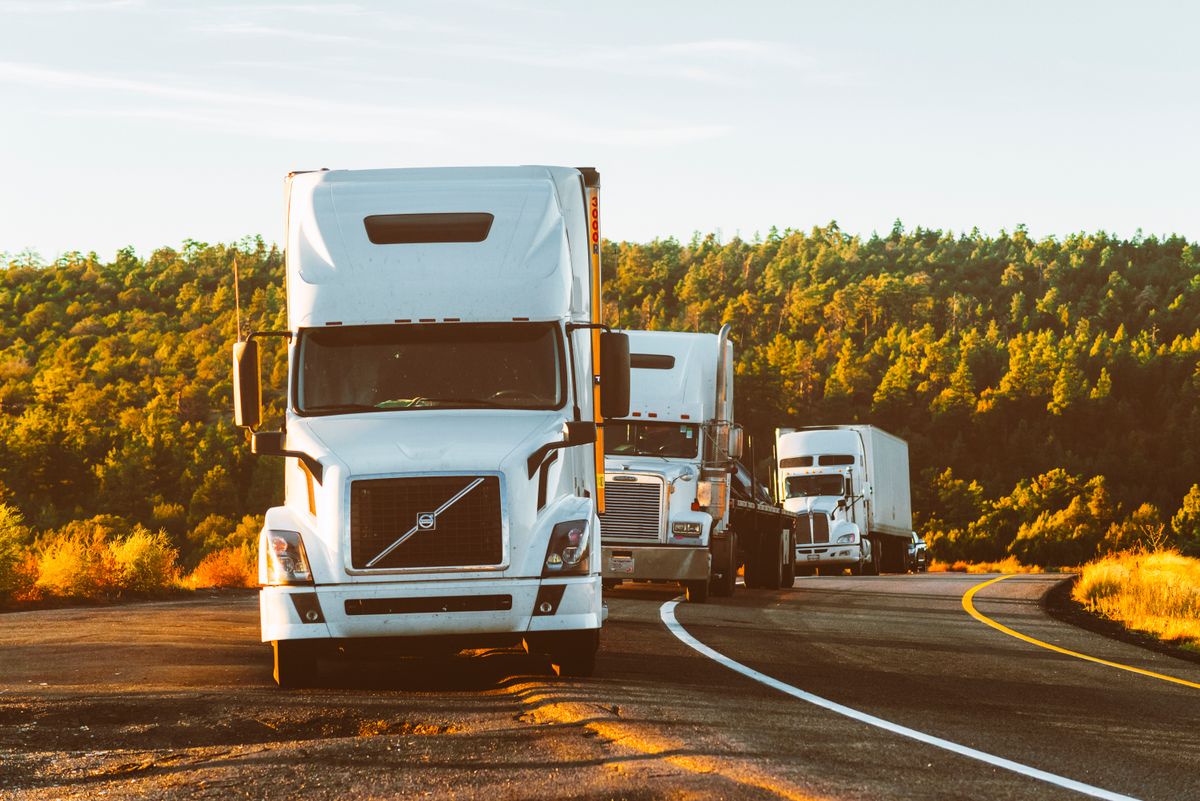
Euro 6 Fleet Standards: All road carriers in our approved vendor network are required to operate Euro 6 compliant vehicles as a minimum condition of partnership. We conduct regular carrier audits and exclude operators who do not meet this standard. Where available, we actively prioritise carriers operating low-emission vehicle technologies including CNG, LNG, and electric trucks on short-haul routes.
2030 Targets
We have established specific, time-bound targets to guide our sustainability programme through to 2030. These are not aspirational statements — they are commitments tied to annual internal reviews.
30% reduction in average CO2 emissions per tonne-kilometre across our managed road freight volume by 2030, against a 2023 baseline. Full CO2 reporting coverage for all client shipments across all modes by end of 2025. 50% of carrier partners operating Euro 6 or alternative-fuel vehicles by 2027. Intermodal share increased to 20% of eligible European long-haul volume by 2028.
Progress against these targets will be published annually. We welcome client scrutiny and supplier dialogue as part of holding ourselves accountable to the standards our industry needs to meet.